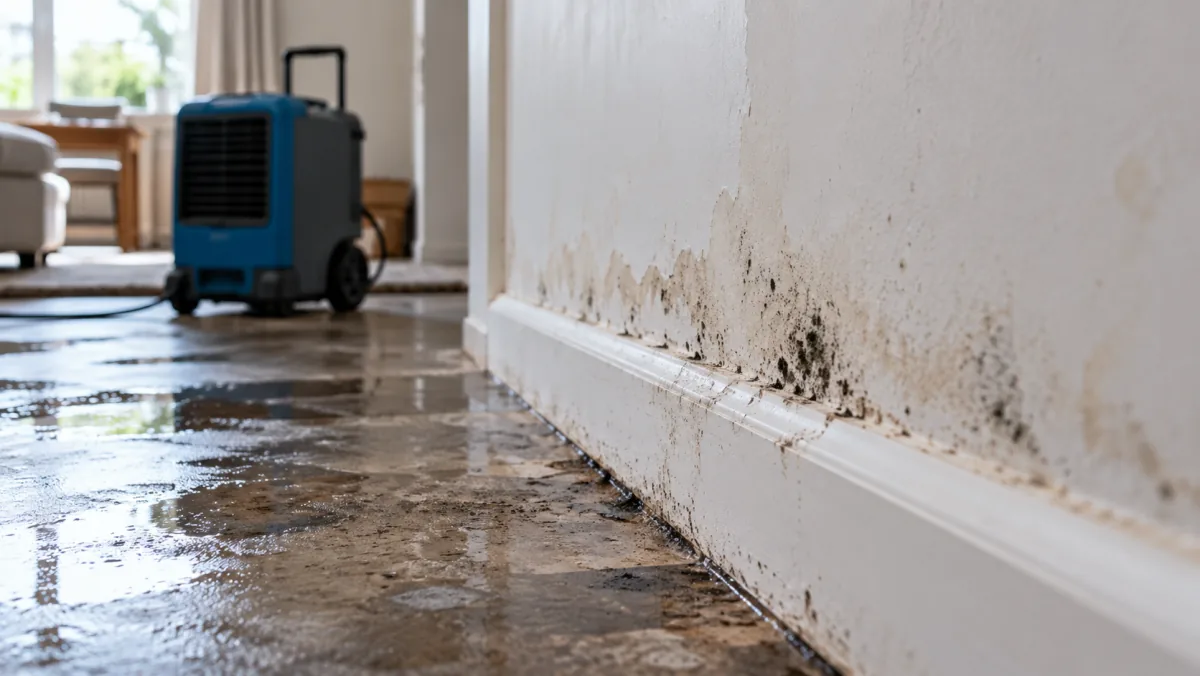
Mould after flooding can show up after the water has gone: a musty smell, or spotting along the bottom of the walls. Moisture can stay trapped in framing, flooring and wall cavities long after surfaces look dry, and mould grows where spores land on damp surfaces. This guide explains why mould follows a flood, how quickly it can start, where it hides and the steps that stop it.
Why Mould Grows After a Flood
Central Hawke’s Bay District Council flood guidance explains that airborne mould spores can grow once they land on damp spots indoors. Health New Zealand advises there is no practical way to eliminate all mould indoors, so the answer is controlling moisture.
A flood takes that control away. BRANZ says drying must reach water trapped in concealed places such as cupboards, wall cavities and behind skirting boards, and moisture in timber framing joints, which do not allow easy airflow for drying.
In an RNZ interview, a BRANZ researcher said around half of New Zealand homes already have visible mould, and flooding dramatically increases the risk.
How Fast Does Mould Grow After a Flood?
Health New Zealand’s floods and health guidance says wet surfaces get mouldy after a couple of days, and its mould guide recommends drying a flooded house within 48 hours if possible. BRANZ says growth could start within just a few days if a home is not dried out thoroughly.
Health New Zealand also says to assume your home is contaminated with mould when:
- It has been flooded for more than two days
- There is water damage
- You can smell strong, musty odours
Where Mould After Flood Damage Hides
MBIE notes that mould on flood-damaged plasterboard may not show on the surface. Check these areas:
- Behind skirting boards and inside wall cavities
- Timber framing joints and base plate connections
- Insulation, wiring and building paper behind wall linings
- Inside cupboards and under stairs
- Wet carpet and underlay
A musty smell with nothing visible is still a warning. Thermal imaging and moisture meters detect moisture that cannot be seen, which is why inspection is part of RESTATE’s mould restoration service.
How to Stop Mould After Flooding
These steps combine Health New Zealand’s guidance with RESTATE’s experience:
- Talk to your insurer before you clean up or throw anything away, and photograph the damage first.
- Remove pooled water and fix leaks so materials are not re-wetted.
- Open doors and windows, then run fans and dehumidifiers once safe power is restored.
- Remove wet items that cannot be properly dried or cleaned.
- Remove wet wall linings so the cavities behind them can dry.
- Clean, treat or remove affected materials as appropriate for the material and the level and type of contamination.
- Disinfect and rinse all surfaces, including floors and walls.
- Replace wall linings and floor coverings only after everything has dried out.
BRANZ warns that repairing while moisture is present can lead to mould, deteriorating structural materials and poor finishes. Professional structural drying measures moisture until materials are dry.
Protect Your Health During the Clean-Up
Health New Zealand advises that mould can trigger congestion, sneezing, coughing and wheezing, and cause respiratory infections. People with allergies, asthma, other lung diseases or weakened immune systems may get worse if exposed. The council guidance recommends that children under 12, pregnant women and people over 65 avoid post-flood cleaning or repair work.
Wear waterproof footwear, gloves, eye protection and a P2 or N95 mask, and avoid water blasters, which can send spores into the air. For more on symptoms, see the guide on whether black mould can cause health problems.
When to Call a Professional
Call a certified restorer when:
- The house was flooded for more than two days
- The floodwater came from sewage, rivers or other overland flows
- Mould covers a large area
- Walls, subfloors or carpet still feel damp after cleaning
- You need documentation for an insurance claim
RESTATE’s mould removal cost guide sets out typical pricing, and the guide to mould insurance in NZ covers the claims side. If a burst pipe caused the water damage, the guide to burst pipe water damage covers the next steps.
Why Choose RESTATE
- IICRC-certified flood restoration technicians
- Commercial drying equipment with 24/7 remote monitoring
- Moisture meters and thermal cameras to find hidden moisture
- Mould treatment using the Goldmorr system
- Photographic reports ready for insurers, working with all NZ insurance brands
- Drying, mould treatment and reinstatement from one company
- Servicing Auckland and Hamilton, with 24/7 flood response
We understand a flood is emotionally difficult, and we take the next steps off your hands.
Frequently Asked Questions
How long after a flood does mould grow?
Health New Zealand says wet surfaces get mouldy after a couple of days. It recommends drying a flooded house within 48 hours if possible.
Can I paint over mould after a flood?
It is best not to. Health New Zealand advises waiting at least three months after repairs before redecorating, to prevent mould, blistering and peeling.
Does bleach kill mould after a flood?
For small areas, Health New Zealand recommends washing with soap and water, then diluted bleach or a commercial mould remover. Large areas need a professional.
Flooded? Stop Mould Before It Starts
The sooner a flooded home is dried, the less chance mould has to grow. RESTATE responds 24/7 to floods across Auckland and Hamilton, and handles drying and mould remediation. Call 0800 332 664 or contact us for a confidential, no-obligation quote.