Walking downstairs to find water across the floor is a horrible start to any day. Whether it is a basement garage, a downstairs rumpus room, or storage space under the house, a flooded basement needs fast action: standing water damages materials within hours and creates the perfect conditions for mould. This guide covers how to remove water from a flooded basement safely, how to dry the space properly, and how to stop basement flooding from happening again.
For immediate help, call RESTATE on 0800 332 664. We respond 24/7.
Why Basements and Downstairs Rooms Flood
Basements sit at the lowest point of the property, so water finds them first. Common causes in New Zealand homes include:
- Heavy rain overwhelming stormwater drains and surface channels
- Groundwater rising through the floor slab after sustained wet weather
- Blocked or undersized drainage around the foundation
- Burst pipes or hot water cylinder failures
- Sloping sections directing runoff toward the house
Knowing the cause matters, because it determines both the cleanup approach and what it takes to prevent basement flooding next time.
Safety First: Before You Touch the Water
Before any cleanup starts:
- Turn off power to the affected area at the switchboard. Water and live outlets are a lethal combination.
- Do not enter deep water until you are sure the power is off.
- Treat the water as contaminated if it has come from outside or through drains. Stormwater and sewage carry bacteria, so wear gloves and boots at a minimum.
- Check for structural concerns. If walls or supports look affected, keep clear and call a professional.
How to Remove Water from a Flooded Basement
Once the area is safe:
- Find and stop the source if you can, such as shutting off the water mains for a burst pipe.
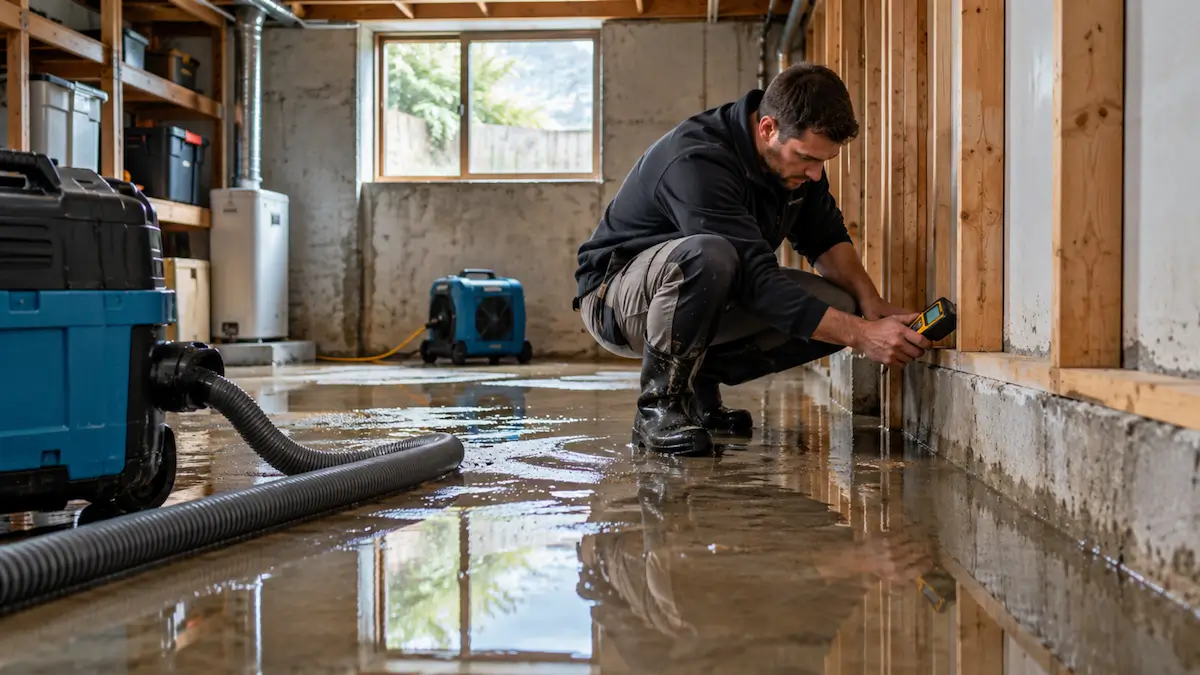
- Pump or wet-vac the standing water. For more than a few centimetres, a submersible pump beats buckets.
- Remove soaked contents. Carpets, rugs, boxes, and furniture hold litres of water and slow the drying of the room itself.
- Lift wet floor coverings. Saturated carpet and underlay usually need professional drying or disposal. See our flooded carpet cleaning and drying service.
- Open everything up. Ventilation starts the drying process while you arrange proper equipment.
If the water has been sitting for more than a day, or has come through drains, professional extraction is the safer option.
Drying the Space Properly
This is the step most people underestimate. A floor that looks dry can still hold serious moisture in the slab, wall linings, and framing. Trapped moisture leads to mould growth, rot, and odour problems weeks later.
Professional structural drying uses commercial dehumidifiers, air movers, and moisture meters to confirm the space is genuinely dry, not just dry to the touch. RESTATE provides structural drying and equipment hire across Auckland and Hamilton, with moisture readings documented for insurance purposes. If mould has already appeared, our mould restoration team can treat it as part of the same job.
How to Stop Basement Flooding Happening Again
Once the space is dry, work through the cause:
- Clear and maintain drains, gutters, and downpipes before winter
- Check that ground levels and paving slope away from the house
- Service or install a sump pump if groundwater is the problem
- Seal visible cracks in foundation walls and the floor slab
- Store contents on shelving rather than directly on the floor
If flooding keeps recurring, get a drainage assessment. The only way to fix basement flooding permanently is to fix its cause: repeated wetting and drying cycles do cumulative damage that costs far more than the repair.
Insurance and a Flooded Basement
Sudden, accidental flooding such as a burst pipe or storm event is often covered by home insurance. Gradual water ingress from poor maintenance usually is not. Photograph everything before cleanup, keep damaged items until your insurer confirms, and use a restoration company that documents moisture readings. Our guide to flood damage and insurance claims covers the process step by step, and our water damage cost guide sets out typical repair ranges.
Why Choose RESTATE
- 24/7 emergency flood response across Auckland and Hamilton
- IICRC-certified technicians
- Commercial-grade water extraction and structural drying equipment
- Insurance-ready documentation and moisture reporting
- Reinstatement capability: repairs handled in the same job
- Fixed-price quotes after assessment
Frequently Asked Questions
How long does a flooded basement take to dry?
With professional equipment, most spaces dry in three to five days. Slabs and framing can take longer, which is why moisture readings matter more than appearances.
Can I just let it dry on its own?
Opening windows helps, but passive drying rarely removes moisture from slabs and wall linings before mould takes hold. Mould can establish within 24 to 48 hours of flooding.
What should I throw away after basement flooding?
Saturated cardboard, particleboard furniture, and underlay are rarely worth saving. Many other items can be restored. Our guide to salvaging belongings after a flood explains what can be saved.
Need Help With a Flooded Basement Now?
RESTATE provides 24/7 flood restoration across Auckland and Hamilton, from water extraction through to structural drying and repairs. Call 0800 332 664 or contact us for a no-obligation quote.