Knowing what to do when someone dies at home in NZ starts with the first phone calls, and most guides stop there. The room where the person died often needs attention too, and the official guidance does not cover it. This guide covers who to call first, when the home can be cleaned, what the cleanup involves, and how rentals and costs work.
For a confidential discussion, call RESTATE on 0800 332 664. The biohazard team is ready to respond 24/7.
The First Calls When Someone Dies at Home
Who you call depends on whether the death was expected. The New Zealand Government guidance is:
- Expected death: call the person’s doctor. This can wait until morning if they died overnight.
- Unexpected death: call 111 and ask for an ambulance and Police.
After an expected death, Health New Zealand says there is no rush, and the person can often stay at home for a time so whānau can say goodbye. It advises turning off heaters and electric blankets and keeping the room as cool as possible. If you are using a funeral director, tell them about the death. This can also wait until morning, and the funeral director will arrange to collect the person.
When the Death Is Unexpected
Police always inform a coroner when someone dies unexpectedly, violently or in suspicious circumstances. The Funeral Directors Association notes that in these cases the person must not be moved or disturbed without the coroner’s permission. Police secure the scene, but they do not clean it. Cleaning can start once Police release the scene.
Some items, such as phones, laptops or notes, may be collected by Police and held for the coronial investigation. The Ministry of Justice guide to coronial services explains that possessions are returned in the same condition in which they were found. Families should be prepared for that.
What the Cleanup Involves
The work depends on how the person died and how long they lay undiscovered.
- After an expected death, Health New Zealand notes the person may lose control of their bowel or bladder. Bedding, a mattress or furniture may need specialist cleaning or safe disposal.
- After an unattended death, the longer the person lay undiscovered, the deeper contamination goes into carpet, underlay, wall linings and furniture. Porous materials often need removal, and odour control may involve ozone treatment, hydroxyl generators or air scrubbing.
- Blood and bodily fluids can carry pathogens such as HIV, Hepatitis B and Hepatitis C, so affected areas should be assessed and cleaned or disinfected as appropriate.
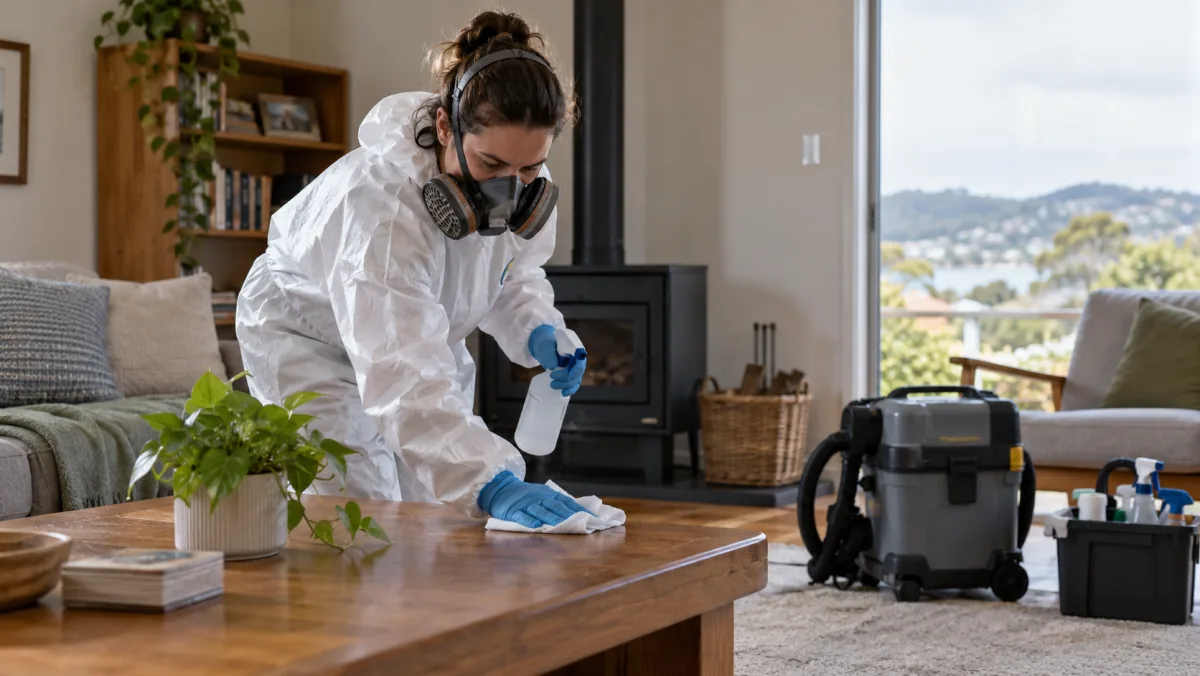
A certified team assesses the room, contains it, removes what cannot be saved, disinfects, and may use ATP testing as part of the cleaning verification process where appropriate. Anything that has to be disposed of is itemised for the family and the insurer. RESTATE’s guide to biohazard cleanup costs and procedure sets out each step.
Why Families Should Not Clean It Themselves
Cleaning the room where a loved one died is emotionally hard, and it carries real health risks. Without protective equipment and hospital-grade disinfectants, contamination can spread to other rooms or remain in porous materials. Biohazardous waste also has to go through approved disposal channels. The article on the hidden dangers of DIY crime scene cleanup covers these risks in more detail.
When Someone Dies in a Rental Home
Tenancy Services says that if the only tenant named on the agreement dies, the tenancy ends on the earliest of these dates:
- 21 days after the next of kin or personal representative gives the landlord written notice of the death
- 21 days after the landlord gives them written notice to leave
- A date agreed in writing between them
- A date set by the Tenancy Tribunal
That leaves a short window to arrange the cleanup and clear the tenant’s belongings. Landlords and families can agree on the timing.
Costs and Insurance
RESTATE’s published price guide says cleanup after a death, including an unattended death, often costs $1,000 to $5,000+, depending on severity. Every job is quoted after an on-site assessment. Some home and contents policies may cover this work, depending on the policy wording and circumstances. Check with your insurer. The guide to who pays for crime scene cleanup explains the options.
Why Choose RESTATE
- IICRC-certified technicians following the S540 standard for trauma and crime scene cleaning
- Experience with unattended death scenes and deceased estate cleaning
- Hospital-grade disinfection, with ATP testing available where appropriate
- Insurance-ready reports, with disposed items itemised
- Servicing Auckland and Hamilton, with 24/7 response
We understand these situations are emotionally difficult. Our team works quietly and with respect for the person and their whānau.
Frequently Asked Questions
Who do you call when someone dies at home in NZ?
Call the person’s doctor if the death was expected. If it was unexpected, call 111 and ask for an ambulance and Police.
Who cleans up after a death at home?
Police do not clean the property. The property owner, or the family on their behalf, arranges a specialist biohazard cleaner.
How long does cleanup after a death take?
Many biohazard jobs can be completed within one to two days, although larger or more heavily affected properties may take longer.
Talk to Us Confidentially
RESTATE’s biohazard and crime scene cleaning team responds 24/7 across Auckland and Hamilton. Call 0800 332 664 or contact us for a confidential discussion and no-obligation quote.


