
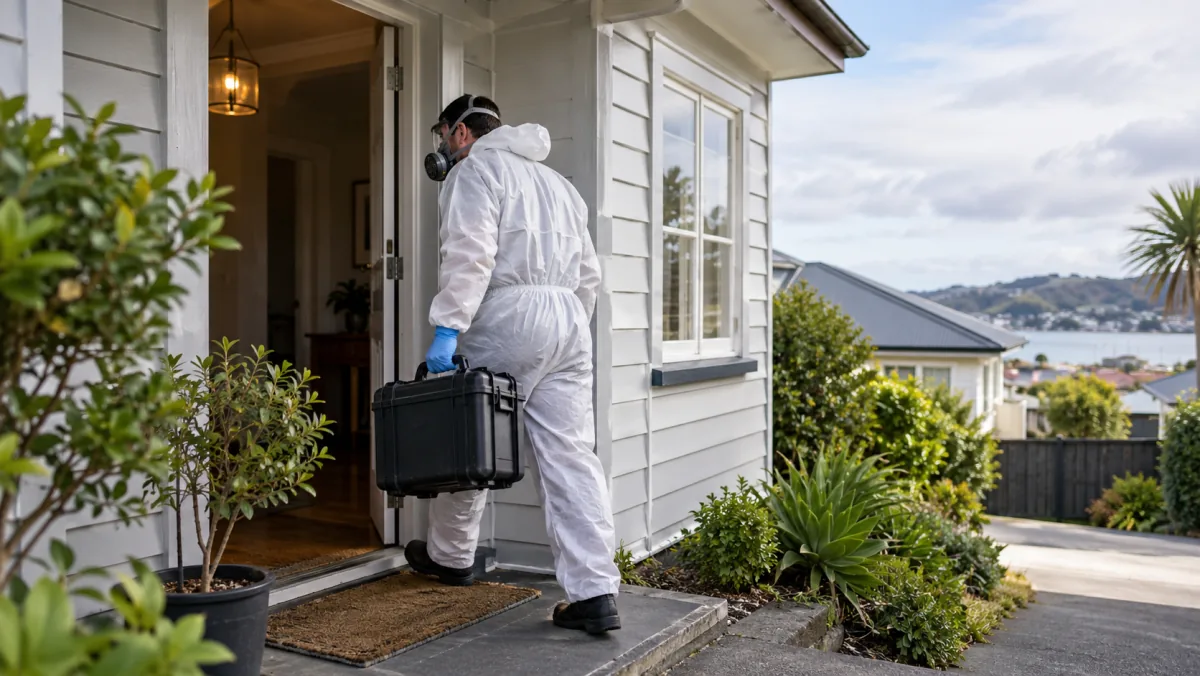
Who pays for crime scene cleanup in NZ is often the first practical question once Police leave a property. Police investigate the scene, but they do not clean it. Responsibility for arranging and paying for the cleanup will depend on the circumstances, and there may be several ways to cover the cost. This guide covers insurance, the Victim Support Crime Scene Grant and the rules for rentals.
For a confidential discussion, call RESTATE on 0800 332 664. The biohazard team is ready to respond 24/7.
What Happens After Police Release the Scene
Police and emergency services secure and investigate a scene. Once the scene is released, specialist biohazard cleaners can take over, as RESTATE’s guide to biohazard cleanup costs and procedure explains.
Blood and other bodily fluids can carry pathogens such as HIV, Hepatitis B and Hepatitis C, so this is specialist work. In most cases the property owner arranges the cleanup first, then recovers what they can.
Does Insurance Pay for Crime Scene Cleanup?
Insurance is the usual route, but cover depends on the policy wording. Home and contents policies may cover professional biohazard cleaning, particularly after sudden trauma, an accidental death or an unattended death. Every policy is different, so check yours before work starts.
Before you claim:
- Call your insurer and ask what your policy covers and what your excess is.
- Ask for the cleaner’s report and an itemised invoice. RESTATE itemises every item that has to be disposed of, so the report can go straight to your insurer.
- Keep the report, photographic records, verification test results and invoice together.
The Victim Support Crime Scene Grant
Manaaki Tāngata Victim Support runs the Victim Assistance Scheme for the Ministry of Justice. Its current guidance, updated 1 July 2026, says crime scene funding of up to $2,000 may be available where a Police cordon has been put in place, Police confirm they are investigating a crime, and the victim has been displaced.
The grant is designed for costs such as professional cleaning, emergency accommodation, essential items like medication and pet boarding. Limits and eligibility criteria apply, and some grants are only available in the immediate aftermath of a crime. The crime must have happened in New Zealand, but you do not need to be a New Zealand resident to apply. Call Victim Support on 0800 842 846 to check what applies to you.
If a family member died because of homicide or another criminal act, the scheme may also offer a discretionary grant towards some of the immediate costs after the death.
Who Pays for Crime Scene Cleanup in a Rental?
Tenancy Services sets out when a tenant is liable for damage to a rental:
- Intentional damage by a tenant or their guests: the landlord can ask the tenant to repair it or pay for it.
- Careless damage: the tenant is liable up to four weeks’ rent or the landlord’s insurance excess, whichever is lower.
- Damage that is neither careless nor intentional: the tenant is not liable.
The tenant is not responsible for damage from burglaries. The tenant must tell the landlord straight away, whoever caused the damage, or the landlord may be able to claim some costs from the tenant if it gets worse.
Landlords and tenants who cannot agree can apply to the Tenancy Tribunal.
When a Death at Home Was Not a Crime
The Crime Scene Grant needs a Police cordon and a confirmed criminal investigation. If those conditions are not met, the grant does not apply, and insurance is the main route.
RESTATE’s published price guide says cleanup after a death, including an unattended death, often costs $1,000 to $5,000+, depending on severity. Where a home and contents policy covers it, the owner arranges the work first, then claims. The guide to what to do when someone dies at home covers that situation step by step.
Why DIY Cleanup Can Cost You More
Your insurer may require documentation relating to professional cleanup, so check your policy and speak to your insurer before undertaking the work yourself. A DIY clean may not qualify for reimbursement. Biohazardous waste such as blood-soaked materials or sharps must also be disposed of correctly, and getting it wrong can lead to fines. The article on the hidden dangers of DIY crime scene cleanup covers the health risks.
Why Choose RESTATE
- IICRC-certified technicians following the S540 standard for trauma and crime scene cleaning
- Insurance-ready reports, with disposed items itemised
- Hospital-grade disinfection, with ATP testing available where appropriate
- Reinstatement quotes when materials cannot be restored
- Servicing Auckland and Hamilton, with 24/7 response
We understand these situations are emotionally difficult, and we handle every job with discretion.
Frequently Asked Questions
Do Police clean up a crime scene in NZ?
Police secure and investigate the scene, but they do not clean it. After the scene is released, the owner or occupier arranges a specialist cleaner.
How much does crime scene cleaning cost?
RESTATE’s crime scene cleaning cost guide sets out typical price ranges. Every scene is quoted after an on-site assessment.
Does insurance cover crime scene cleanup in NZ?
It often does, but it depends on your policy wording. Talk to your insurer before work starts, and keep the cleaner’s report and invoice for your claim.
Need Help After a Crime at Your Property?
RESTATE’s biohazard and crime scene cleaning team responds 24/7 across Auckland and Hamilton, with reports ready for your insurer. Call 0800 332 664 or contact us for a confidential discussion and no-obligation quote.


