
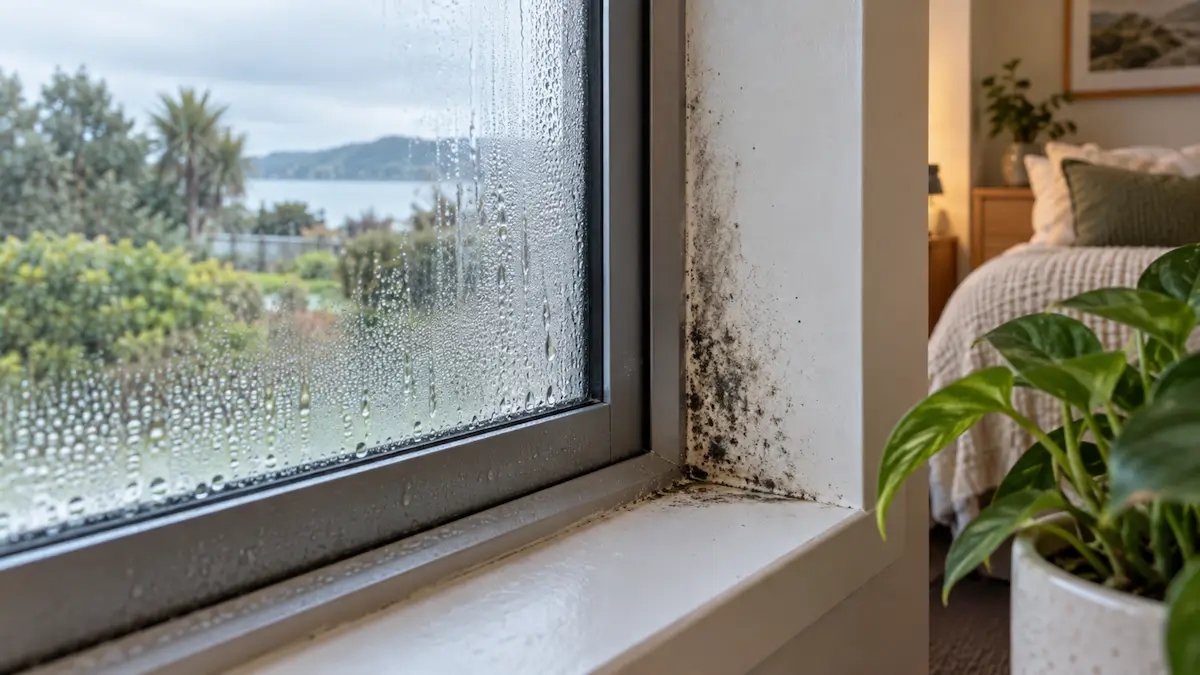
Wet windows every winter morning, damp curtains, and black spotting creeping across the ceiling: for many New Zealand households this is just part of winter. It shouldn’t be. Condensation is one of the most common causes of mould in NZ homes, and unlike a leak or a flood, it works slowly, feeding mould growth week after week through the colder months. This guide explains why condensation happens, how it turns into a mould problem, the health risks involved, and what actually fixes it.
Why NZ Homes Get So Much Condensation
Condensation forms when warm, moist air touches a cold surface and turns back into liquid, which is why it shows up first on single-glazed windows, aluminium joinery, and cold south-facing walls.
Everyday living produces a surprising amount of moisture: cooking, showering, unvented clothes dryers, drying washing inside, and simply breathing overnight. In a poorly insulated, poorly ventilated home, that moisture has nowhere to go. Many older New Zealand houses combine cold surfaces with limited airflow, ideal conditions for condensation.
How Condensation Becomes a Mould Problem
Mould needs two things: moisture and a surface to grow on. Condensation supplies both, day after day.
The pattern is predictable. Moisture settles on windows, sills, and wall corners, those surfaces stay damp for hours each day, and the spores always present in the air settle and establish. Within weeks you see spotting on ceilings, window reveals, curtains, and wardrobe walls.
Condensation mould tends to appear in:
- Bedrooms, especially behind beds and inside wardrobes
- Bathroom ceilings and window frames
- South-facing rooms that get little sun
- Corners where walls meet ceilings
- Behind furniture pushed against external walls
Not sure whether you are looking at condensation mould or a leak? Condensation mould shows as scattered surface spotting across cold areas and tends to ease over summer. Mould from a leak is concentrated around one point, often with staining, bubbling paint, or swollen materials, and keeps spreading whatever the season. If it looks like a leak, treat it as water ingress and get it investigated.
The Health Risks of Living With Mould
Mould is not just cosmetic. Spores and the compounds they release can trigger asthma, allergies, and respiratory irritation, with children, the elderly, and anyone with existing respiratory conditions most at risk. Damp, mouldy bedrooms are a particular concern because of the hours spent in them overnight. For a closer look at the health side, see our guide on whether black mould can cause health problems.
How to Reduce Condensation in Your Home
The fix is a combination of less moisture, more ventilation, and warmer surfaces:
- Ventilate daily. Open windows for 10 to 15 minutes each morning to flush out moist air.
- Use extractor fans in the kitchen and bathroom, and run them for a few minutes after cooking or showering.
- Dry washing outside or use a vented or condensing dryer.
- Wipe down wet windows each morning during winter.
- Heat rooms consistently. Warm surfaces collect less condensation than cold ones.
- Pull furniture slightly away from external walls to let air circulate.
- Consider insulation and ventilation upgrades for rooms that stay persistently damp.
When Cleaning Is Not Enough
Wiping visible mould off a window frame is fine as routine maintenance. But if mould keeps returning, has spread across ceilings or walls, or is growing on porous surfaces like gib and curtains, surface cleaning will not solve it. Bleach on a cloth does not address the airborne spore load or the moisture cycle feeding the growth.
That is the point to bring in a professional. RESTATE’s mould restoration service treats the affected surfaces and the airborne spores using the Goldmorr system, with containment to stop spread during the work. Where the source of the moisture is unclear, a moisture and mould inspection identifies what is driving the problem before any treatment starts. Treatment starts from $395 ex GST*, and our mould removal cost guide breaks down typical pricing.
*Price current as of 1 January 2026 and subject to change.
Why Choose RESTATE
- IICRC-certified technicians, trained in mould remediation
- Exclusive NZ and Pacific Islands distributor, training provider and user of the Goldmorr mould remediation system
- Mould and moisture inspections with photographic reporting
- Insurance and tenancy-ready documentation
- Reinstatement capability for damaged gib, paint, and flooring
- Servicing Auckland and Hamilton, with 24/7 response
Frequently Asked Questions
Does condensation mould come back after cleaning?
Yes, if the moisture cycle continues. Treatment removes the mould and airborne spores, but ventilation and heating habits need to change or the conditions that caused it remain.
Is condensation mould dangerous?
It carries the same health risks as any indoor mould: respiratory irritation and allergy and asthma triggers, with longer exposure making things worse.
Whose responsibility is condensation mould in a rental?
Landlords must provide a home that meets ventilation and insulation requirements, while tenants must ventilate and heat reasonably. Our guide to mould in rental properties covers both sides.
Persistent Mould Problem? Talk to Us
If mould keeps coming back no matter how often you clean it, the cause needs proper diagnosis. RESTATE provides mould inspection and certified remediation across Auckland and Hamilton. Call 0800 332 664 or contact us for a confidential, no-obligation quote.


