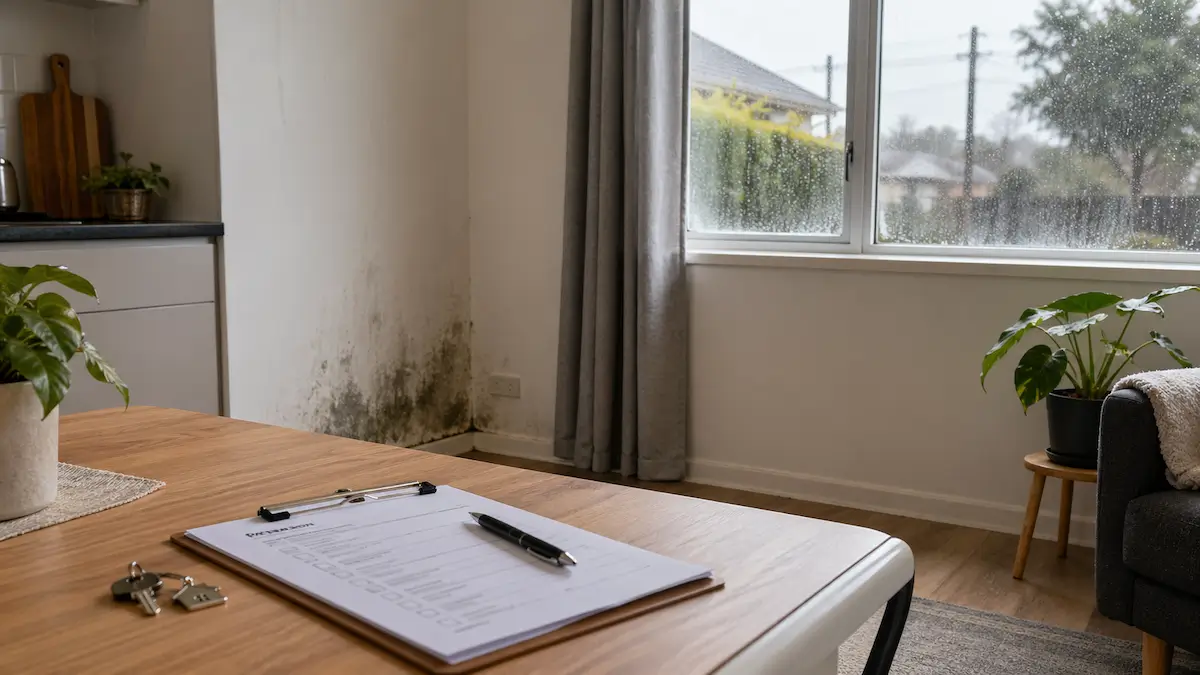
Mould in a rental property is one of the most common disputes between landlords and tenants in New Zealand. The damp climate, ageing housing stock, and the Healthy Homes Standards (which all private rentals have had to meet since 1 July 2025) mean the question of who is responsible (and who pays) comes up often. This guide explains the legal framework, what landlords and tenants are each obliged to do, what property managers should be documenting, and the practical steps to take when mould appears.s
For Tribunal-ready mould inspection and remediation across Auckland and Hamilton, call RESTATE on 0800 332 664.
Who Is Responsible for Mould in a NZ Rental?
Responsibility usually depends on the cause:
- Mould caused by structural issues (leaking roof, rising damp, poor ventilation, insufficient insulation) is the landlord’s responsibility under the Residential Tenancies Act 1986 and the Healthy Homes Standards.
- Mould caused or worsened by tenant behaviour (drying laundry indoors without ventilation, blocking vents, not opening windows, not reporting leaks) is the tenant’s responsibility.
- In many cases both contribute, and the Tenancy Tribunal apportions costs.
The key test is whether the property meets its statutory standards. If the landlord has failed to provide adequate heating, ventilation, insulation, or drainage, mould is generally treated as a landlord issue. Authoritative guidance for tenants and landlords sits at tenancy.govt.nz.
The Healthy Homes Standards and Mould Prevention
Since 1 July 2025, all private rental properties in New Zealand must comply with the Healthy Homes Standards, which set minimum requirements for:
- Heating in the main living area
- Ceiling and underfloor insulation
- Ventilation (extractor fans in kitchens and bathrooms)
- Moisture ingress and drainage (guttering and ground moisture barriers)
- Draught stopping
Landlords must also include a Healthy Homes compliance statement in any new or renewed tenancy agreement. Failing to do so attracts a separate financial penalty of up to $500 per tenancy. Failure to meet the standards themselves attracts financial penalties of up to $7,200 per breach under the Residential Tenancies Act, plus orders to fix the issue.
Landlord vs Tenant Responsibilities at a Glance
| Area | Landlord | Tenant |
| Heating, insulation, ventilation systems | Provide and maintain to Healthy Homes standard | Use them properly (e.g. switch on extractor fans) |
| Roof, gutters, plumbing leaks | Repair promptly when notified | Report leaks in writing as soon as they appear |
| Mould caused by structural defect | Arrange professional remediation and reporting | Allow access for inspection and repairs |
| Mould caused by daily living | n/a | Ventilate, avoid drying laundry indoors without extraction, clean reasonably |
| Compliance documentation | Compliance statement in tenancy agreement, records of works | Keep evidence (photos, dated written reports) |
| Tribunal exposure | Up to $7,200 per breach + $500 for missing compliance statement + orders to fix | Possible costs orders if mould caused or worsened by neglect |
What to Do If You Find Mould in Your Rental
For tenants: document the mould with dated photos, notify the landlord or property manager in writing, keep ventilating the affected area, and escalate to Tenancy Services if there is no response within a reasonable time (usually 14 days for non-urgent issues).
For landlords: inspect promptly after any tenant report, identify the moisture source with a proper moisture and mould inspection, arrange remediation with a certified specialist (not a general handyman), and keep written records of the report, the works, and any building repairs.
For property managers: maintain a documented inspection cycle, file all tenant communications, and use independent specialists for any inspection that may end up at the Tribunal. A photographic report from a third party carries far more weight than internal notes.
When the Tenancy Tribunal Gets Involved
If mould cannot be resolved between the parties, either side can apply to the Tenancy Tribunal. The Tribunal can:
- Order the landlord to carry out specific repairs or remediation
- Award compensation to the tenant (rent reduction, damaged belongings, alternative accommodation)
- Order the tenant to pay for damage they caused
- Award financial penalties (unlawful act damages) for breaches of the Healthy Homes Standards or the Residential Tenancies Act, with proceedings brought either by the affected party or by MBIE’s Tenancy Compliance and Investigations Team
Published Tribunal decisions involving mould typically turn on three things: whether the cause was structural or behavioural, whether the landlord was put on notice, and whether independent inspection evidence was available. Compensation in mould cases has ranged from rent reductions of a few hundred dollars per week through to multi-thousand-dollar awards in serious breaches involving health impact and damage to belongings.
A photographic report from a certified mould specialist that identifies the moisture source and quantifies the contamination is the single piece of evidence that most often shifts the outcome.
Why Choose RESTATE
- Tribunal-ready inspection reports: photographic, calibrated, with identified moisture source and recommended remediation
- IICRC-certified technicians, accepted by NZ insurers and Tenancy Services
- Goldmorr remediation system (exclusive NZ distributor)
- Single provider for inspection, remediation, and reinstatement (gib, paint, flooring) so the property goes back to rental-ready in one engagement
- Confidential reporting that works for both landlord and tenant claims
- 24/7 emergency response across Auckland and Hamilton
We work with property managers, body corporates, individual landlords, and tenants directly. Reports are written so they hold up at the Tribunal regardless of which side commissions them.
Frequently Asked Questions
Can a tenant withhold rent over mould?
Withholding rent without a Tenancy Tribunal order is risky and can put the tenant in breach of the tenancy. The correct route is to put the issue in writing, request remediation, and apply to the Tribunal if the landlord does not act.
Does the landlord have to pay for a mould inspection?
If the mould is caused by a structural issue, yes. If the cause is in dispute, an independent specialist inspection clarifies responsibility and is usually paid by the party who arranges it, with costs recoverable through the Tribunal if appropriate.
Can a tenancy be ended because of mould?
A tenant can apply to terminate the tenancy if the property is unfit to live in due to severe mould or breach of the Healthy Homes Standards. Less serious cases are usually resolved through remediation orders.
Do the Healthy Homes Standards apply to all rentals?
Yes. As of 1 July 2025, all private rental properties must comply. Boarding houses have been required to comply since 1 July 2021, and Kāinga Ora and registered Community Housing Provider properties since 1 July 2024.
What does professional mould remediation cost?
For a typical residential job, see our guide to mould removal costs in NZ. Inspections start from $395 ex GST.
If you are a landlord, property manager, or tenant dealing with mould in a NZ rental, RESTATE provides certified inspection and remediation across Auckland and Hamilton with reporting that meets insurance and Tribunal requirements. Call 0800 332 664 or contact us for a confidential, no-obligation quote.
Author: Reviewed by Tom Law, founder of RESTATE Property Restoration. RESTATE works with insurers, property managers, body corporates, and tenants on mould remediation in rental properties across New Zealand.